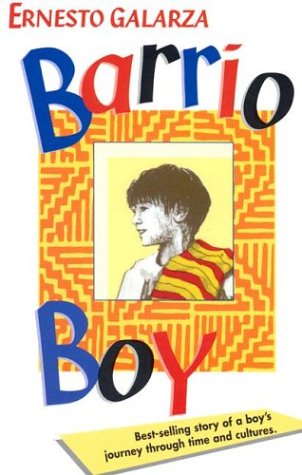
Galarza, Ernesto (2011). Barrio Boy. Notre Dame, IN: University of Notre Dame Press.
If I am honest, this book was a difficult read for me. I read all the time and I read a wide variety of genres. The writing was great and the content was interesting, but this book was intense. I found myself rereading sections all the time, especially in the first two sections, because I wanted to make sure I was understanding everything and picturing everything as accurately as possible. To state the obvious, I didn't grow up in a small mountain village in Mexico, so it took some time to wrap my head around the setting of the book. That being said, I greatly enjoyed reading about his life in Mexico and his transition in to life in America.
The only negative thing I have to say is completely based on preference. Most of the book was spent on Ernesto's life in Mexico. I understand that part of his life is important and it certainly was essential in laying the foundation leading into his acculturation. But I personally found his trials and experiences of adapting to life in the United States more interesting. That could be because I understand American culture so I didn't have to reread as much or it could be that I felt that connected a bit more with the class for which I read the book. Either way, I know I got a lot out of this book. It was detailed, informative, and mildly entertaining (meaning it made me laugh more than a few times).
I would give this book 3 stars and I would recommend it to anyone studying or curious about acculturation.
If I am honest, this book was a difficult read for me. I read all the time and I read a wide variety of genres. The writing was great and the content was interesting, but this book was intense. I found myself rereading sections all the time, especially in the first two sections, because I wanted to make sure I was understanding everything and picturing everything as accurately as possible. To state the obvious, I didn't grow up in a small mountain village in Mexico, so it took some time to wrap my head around the setting of the book. That being said, I greatly enjoyed reading about his life in Mexico and his transition in to life in America.
The only negative thing I have to say is completely based on preference. Most of the book was spent on Ernesto's life in Mexico. I understand that part of his life is important and it certainly was essential in laying the foundation leading into his acculturation. But I personally found his trials and experiences of adapting to life in the United States more interesting. That could be because I understand American culture so I didn't have to reread as much or it could be that I felt that connected a bit more with the class for which I read the book. Either way, I know I got a lot out of this book. It was detailed, informative, and mildly entertaining (meaning it made me laugh more than a few times).
I would give this book 3 stars and I would recommend it to anyone studying or curious about acculturation.

Comments
Post a Comment